

Garage Door Spring Replacement Cost: What Homeowners Should Expect in 2026
February 16, 2026
- By
- Green Bay Garage Door Guards
- Garage Door Specialists
Wondering what your garage door spring replacement cost might look like in 2026? This checklist style guide is designed for homeowners who want clear pricing details, practical safety information, and a step by step understanding before scheduling service. At Green Bay Garage Door Guards, we have helped local homeowners deal with broken springs for years, and we continue to hear the same concerns each season. Many people assume that a sudden loud bang means the automatic opener has failed. In reality, that noise often signals a torsion spring snapping under extreme tension. When this happens, the full weight of the door is no longer supported, which can leave it stuck halfway or completely shut. A failed spring can also place extra stress on rollers, cables, tracks, and even the door frame itself. Reviewing basics such as our garage door maintenance checklist can reduce unexpected issues, but once a spring breaks, professional replacement becomes essential for safe operation.
What Quality Service Should Always Include

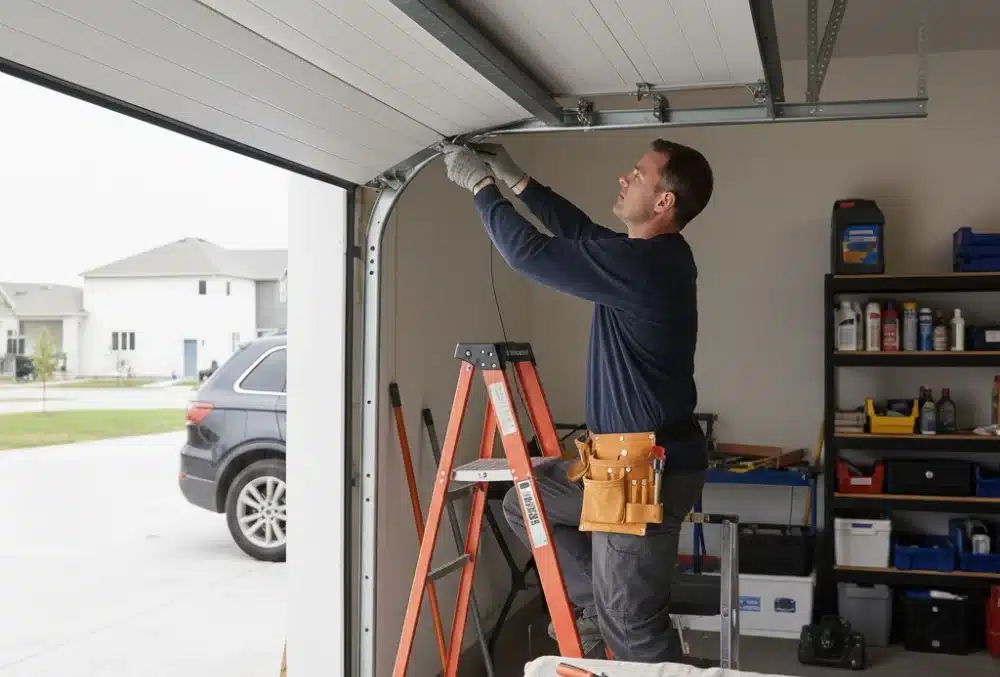
Proper spring replacement protects your home, your warranty, and everyone who uses the door each day. Just as important as the parts themselves is who installs them. Local expertise matters because garage doors in this area face specific demands from climate, housing styles, and daily use patterns. Seasonal temperature swings affect metal expansion and contraction, which directly impacts spring tension and lifespan. A technician who works locally understands how these conditions influence spring selection, cycle ratings, and long term performance. Best practices always include correct sizing, controlled tensioning, and a full system inspection. Springs never operate alone. They work in coordination with cables, drums, bearings, tracks, and the opener. Quality service should include:
- Cycle rated torsion springs precisely matched to the actual door weight.
- Replacement of both springs on a two spring system to maintain balanced torque.
- Inspection of lift cables and bottom brackets for fraying, rust, or stress wear.
- Lubrication with silicone based or light lithium based lubricant – never heavy grease that traps debris.
- Opener force and travel adjustment after the door is properly balanced.
What Affects Price, Timing, and Next Steps
Garage door spring replacement cost in 2026 reflects more than just parts and labor. For local homeowners, it represents safety, reliability, and long term savings. Most standard residential torsion spring replacements range from $180 to $450 for a single spring and $300 to $700 for a two spring system. High cycle or oversized custom springs may increase that investment, but they often provide significantly longer service life in return. Several factors influence your final price and the overall value you receive.
- Site complexity: High lift tracks, limited headroom, or heavier insulated doors require careful calibration and additional labor time.
- Material quality: Oil tempered high cycle springs cost more upfront but can last two to three times longer than basic 10,000 cycle models.
- Total system condition: Addressing worn cables, bearings, or structural concerns such as garage door frame repairs during the same visit can prevent repeat service calls and future failures.
Schedule a Professional Spring Evaluation
If your garage door feels unusually heavy, moves unevenly, or you heard a sharp snap from above, do not wait another day. A failing spring places extreme strain on every moving part of your system and can quickly lead to costly damage or sudden door failure. Acting now protects your vehicle, your home, and your family’s safety. At Green Bay Garage Door Guards, we perform precise balance testing, install high cycle springs matched to your exact door weight, and complete a full safety inspection to ensure long term reliability. You receive honest recommendations, clear pricing, and workmanship you can trust. Every day you delay increases wear and risk. Call now to schedule fast, professional service and restore smooth, dependable operation before a minor issue becomes an expensive emergency.

FAQs
How do I know if my garage door spring is broken?
One of the clearest indicators of a broken garage door spring is a sudden loud bang coming from the garage, often described as sounding like a firecracker or a heavy object falling. After this noise, the door may refuse to open more than a few inches or may not open at all. With torsion spring systems, you can sometimes see a visible separation in the coil, typically a gap of 1 to 2 inches where the spring has snapped. Extension springs, which run along the horizontal tracks, may appear loose, stretched out, or disconnected. You may also notice the automatic opener struggling to lift the door or moving it unevenly. If you try to raise the door manually, it may feel extremely heavy because the springs are responsible for counterbalancing most of the door’s weight. To test the balance, disconnect the opener using the emergency release cord and carefully lift the door halfway. A properly functioning spring system should allow the door to stay in place. If it falls quickly or feels unstable, the springs are likely damaged. Avoid forcing the opener, as this can strain the motor and internal gears. Prompt professional service is strongly recommended to prevent further damage and ensure safe operation.
Should both springs be replaced at the same time?
In most two spring torsion systems, replacing both springs at the same time is typically the safest and most cost effective decision. Torsion springs are designed to work as a matched pair, and because they lift and lower the door together, they complete the same number of cycles over their lifespan. This means that when one spring breaks, the second spring is usually very close to the end of its service life as well. If only one spring is replaced, the older spring may fail shortly afterward, leading to another service appointment and additional labor costs. There is also a performance concern. An older spring that has lost some of its original tension can create uneven torque when paired with a brand new spring. This imbalance may place unnecessary strain on cables, drums, bearings, and the garage door opener. Over time, that extra stress can shorten the life of other system components. By installing a matched pair of properly rated, cycle tested springs, you help ensure smoother operation, better balance, and more reliable long term performance.
What is the average garage door spring replacement cost in 2026?
The average garage door spring replacement cost in 2026 typically ranges from $180 to $450 for a single torsion spring and from $300 to $700 for a standard two spring system. Homes with larger or heavier insulated doors may require custom sized or high cycle springs, which can increase the total investment beyond these averages. Pricing depends on several important factors, including site complexity, current material costs, and the total scope of work required to restore safe operation. Additional components can also affect the final price. High lift track systems, specialty mounting hardware, reinforced brackets, or worn cables often require extra labor and replacement parts. If the door has alignment issues, damaged rollers, or bearing wear, those concerns may need to be addressed at the same time to ensure proper balance and long term performance. These figures serve as general benchmarks for planning purposes only and are not a binding quote. A professional on site inspection is necessary to provide an accurate and finalized proposal.
Can I replace a garage door spring myself?
Spring replacement involves stored mechanical energy under extreme tension, and that energy can release violently if handled incorrectly. A standard torsion spring mounted above a garage door can hold hundreds of pounds of torque, enough to cause severe injury in a fraction of a second. Safe replacement requires solid steel winding bars of the correct diameter, locking pliers to secure the torsion shaft, and a clear understanding of quarter turn calculations to properly balance the door. Improvised tools such as screwdrivers or loose fitting rods can slip out during winding and lead to serious accidents. While some experienced DIY homeowners may attempt light extension spring replacements when safety cables are already installed, torsion spring systems demand precise measurement of wire size, inside diameter, and overall length. Incorrect sizing or improper winding can cause the door to slam shut, drift open, or fly upward uncontrollably. Reading spring charts accurately and calculating IPPT, or inch pounds per turn, is essential for correct tensioning. Without the proper tools and training, the risk of injury and property damage typically outweighs any potential labor savings.
What maintenance helps extend spring life?
Garage door springs wear according to cycle count, meaning one full opening and closing of the door equals a single cycle. Over time, repeated cycling leads to normal metal fatigue. While this natural wear cannot be completely prevented, you can significantly reduce the risk of premature failure with consistent maintenance. Apply a light silicone-based or lithium-based garage door lubricant to the torsion springs two to three times per year. Proper lubrication minimizes friction between the coils and helps prevent rust and corrosion. Avoid using heavy grease because it attracts dust and debris, which can interfere with smooth movement. Maintaining proper door balance is equally important. Every few months, disconnect the opener and lift the door manually to check its balance. If the door drifts upward or falls downward on its own, it likely needs professional adjustment. Operating an unbalanced door places unnecessary strain on the springs and shortens their lifespan. Additionally, inspect lift cables for fraying and confirm that rollers glide smoothly within the tracks. Addressing minor alignment or hardware concerns early ensures the springs function under correct tension rather than compensating for other mechanical issues.
Why do garage door springs break?
Springs break primarily because of metal fatigue that develops after thousands of opening and closing cycles. Every time a garage door moves, the springs expand and contract, gradually weakening the steel. Most standard torsion or extension springs are rated for approximately 10,000 cycles, which typically translates to about 7 – 10 years for an average household. Homes with multiple drivers or frequent daily use may reach that limit much sooner. Corrosion is another major factor. Moisture, humidity, and temperature fluctuations can cause rust to form on the coils, and rust increases friction while reducing the flexibility of the metal. Garages without climate control are especially vulnerable to this type of wear. Improper spring sizing also contributes to early failure. If a spring is undersized for the weight of the door, it must exert more force during each cycle, accelerating fatigue. In addition, worn rollers, frayed cables, or misaligned tracks can create imbalance, placing uneven stress on the springs. Routine maintenance, lubrication, correct installation, and periodic inspections significantly reduce the risk of premature spring failure.
What should I look for when hiring a professional?
Look for a company that clearly explains how they determine proper spring sizing, including how door height, weight, and track radius affect torque requirements. A reputable provider should discuss cycle ratings in practical terms, such as the difference between standard 10000 cycle springs and higher durability 20000 cycle or 30000 cycle options. They should also outline safety procedures step by step, including how they secure the door, release tension safely, and verify stable operation before leaving. Technicians should arrive with professional winding bars, calibrated scales for measuring door weight, and high quality replacement cables, not just basic hand tools pulled from a general toolbox. Ask whether they automatically replace both springs on a two-spring system to maintain balanced lifting power and prevent uneven wear. Confirm that the company carries liability insurance and request clear warranty terms covering both parts and labor. A thorough technician will test door balance manually before reconnecting the opener and will fine tune opener force settings afterward for safe, reliable performance.
What should I do immediately after a spring breaks?
If you hear a loud snapping sound from your garage and the door suddenly refuses to open, stop using it immediately. That sharp noise often indicates a broken torsion or extension spring, which is a critical component responsible for counterbalancing the weight of the door. Continuing to operate the system can strain or burn out the opener motor. Disconnect the automatic opener using the emergency release cord to prevent further damage. Do not attempt to lift a double wide or heavy wooden door on your own. Without spring tension, the full weight of the door can range from 150 to 300 pounds or more, making it extremely dangerous to handle without proper tools and training. Perform a visual inspection from a safe distance to see if a torsion spring is separated or if an extension spring is hanging loose. Keep children and pets away from the area. While this issue is not always an emergency, it becomes urgent if the door is stuck partially open and leaves your home exposed. In that case, secure the opening as best as possible and arrange for professional repair promptly to restore safe and reliable operation.