

Garage Door Maintenance Checklist for Wisconsin Winters
February 10, 2026
- By
- Green Bay Garage Door Guards
A homeowner once called us because their garage door refused to open after the first deep freeze. The motor hummed, the door stayed put, and their car was trapped inside. At Green Bay Garage Door Guards, we’ve been helping homeowners solve winter-related garage door problems for years, and this exact scenario shows up every season. Cold temperatures expose weak springs, dry rollers, misaligned tracks, and sensors affected by frost. In our experience, many homeowners assume the door “just froze,” when the real issue is neglected maintenance that finally reached a breaking point. We’ve seen simple checks prevent costly repairs and dangerous failures. This guide walks through a practical, field-tested garage door maintenance checklist Wisconsin winter conditions demand, based on what actually fails in cold weather. For more background on related issues, our garage door blog resources cover common seasonal failures in detail.
What Proper Garage Door Service Should Include

Effective winter garage door maintenance follows clear mechanical and safety standards. Shortcuts show up quickly in cold weather, which is why we focus on thorough inspection rather than surface-level fixes. The goal is reliable operation under temperature stress, not just quiet movement on a mild day. Quality service aligns with DASMA technical data sheets and manufacturer installation manuals. These standards exist to prevent uneven loading, cable failure, and sensor bypassing – issues that become more dangerous when materials contract in the cold. A professional winter maintenance visit should include:
- Spring balance testing with the door disconnected from the opener to verify neutral lift
- Inspection of lift cables for corrosion, fraying, or ice-related abrasion
- Track alignment checks using a level and measured clearances
- Lubrication with silicone-based spray for rollers and lithium-based grease for steel bearings
- Safety sensor cleaning, alignment, and reversal force testing
- Weather seal inspection for brittleness or compression loss

Preventive Care, Timing, and Cost Expectations
Prevention is where winter garage door maintenance delivers the most value. In our experience, doors that receive a focused inspection before sustained cold arrives are far less likely to fail during peak winter months. We recommend a structured checklist completed annually, with quick visual checks monthly during winter:
- Pre-winter: full balance test, lubrication, and hardware inspection
- Monthly: sensor wipe-down and visual cable check
- Mid-winter: listen for new noises or delayed response
- Site complexity and door size
- Material costs for rollers, seals, or springs
- Total scope of repairs required
Schedule a Winter Readiness Check
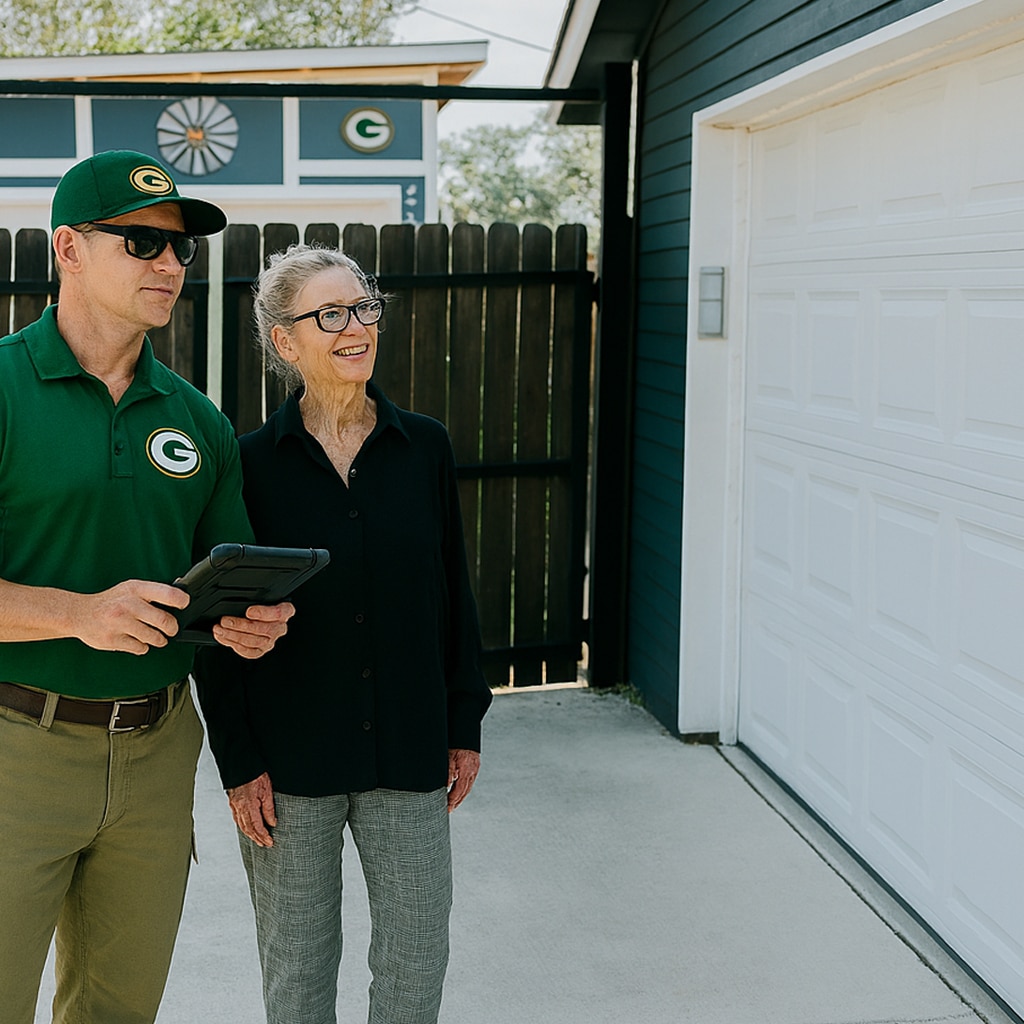
If your garage door has not been professionally checked since temperatures dropped, now is the moment to act. Green Bay Garage Door Guards helps homeowners stop minor wear from becoming dangerous failures or expensive emergencies. A timely winter readiness inspection improves safety, extends the life of your system, and helps your door operate smoothly when freezing conditions put the most strain on moving parts. Our technicians examine balance, lubrication, sensor accuracy, and weather sealing – the areas most likely to fail in cold weather. You get clear explanations, honest recommendations, and fast solutions that protect your investment and your family. Do not wait for a breakdown during the next cold snap. Call Green Bay Garage Door Guards now to schedule your inspection and secure reliable performance all winter long.
FAQs
Why does cold weather affect garage doors so much?
Cold weather places added stress on nearly every moving part of a garage door system. As temperatures drop, metal components contract and standard lubricants thicken, reducing their ability to flow and protect against friction. Springs can lose a portion of their elasticity, rollers may develop flat spots, and bearings can bind or grind when lubrication is not suited for cold conditions. Doors that operate smoothly in mild weather often struggle once prolonged cold sets in, revealing weaknesses that were already present. Safety sensors are also vulnerable during winter. Frost, condensation, or ice buildup on the sensor lenses can interrupt the beam and trigger unexpected reversals. Weather seals along the bottom and sides of the door can become stiff and brittle, increasing resistance as the door moves. These seasonal changes rarely create entirely new failures on their own. Instead, they expose existing wear, imbalance, or marginal components. For this reason, a winter-specific maintenance checklist emphasizes door balance, correct cold weather lubrication, spring performance, and sensor reliability rather than cosmetic or surface level adjustments.
How often should garage door maintenance be done in winter climates?
In cold climates, we recommend a full professional inspection once a year before winter begins, paired with light homeowner checks performed monthly throughout the cold season. The annual service is designed to prepare the system for harsh temperatures and increased mechanical stress. A trained technician evaluates spring balance, inspects cables for fraying or corrosion, confirms proper track alignment, and applies cold rated lubrication to key moving components. These steps help prevent stiffness, binding, and premature wear when temperatures drop. Monthly homeowner checks are quick but valuable. Listen for new or unusual noises, observe the door for uneven or hesitant movement, and make sure safety sensors remain clean and properly aligned. Snow, ice, and road salt residue can interfere with smooth operation if left unchecked. Our experience shows that doors maintained on this schedule experience fewer mid-winter failures, quieter operation, and reduced strain on the opener. Skipping the pre-winter inspection often results in emergency service calls at the worst possible time, when temperatures are lowest and components are under maximum stress.
What does winter garage door maintenance typically cost?
Winter maintenance costs can vary significantly based on the findings of a professional inspection and the specific conditions present at the property. A basic tune up generally begins at a standard service fee that covers inspection, lubrication, and minor adjustments intended to improve performance during colder months. However, total costs may increase if the technician identifies worn rollers, stretched or frayed lift cables, misaligned tracks, or fatigued springs that no longer provide proper balance. Environmental exposure, door age, and usage frequency all influence the level of wear discovered during service. Pricing can also fluctuate according to site complexity, accessibility, material availability, and the overall scope of required work. For example, a double wide insulated door equipped with torsion springs typically demands more labor time and technical effort than a smaller single door with lighter components. These cost ranges are provided strictly as general benchmarks to help with planning and expectations. They are not binding quotes or guarantees of final pricing. A complete on site evaluation is necessary to assess conditions accurately and prepare a precise, written proposal.
Can homeowners do winter garage door maintenance themselves?
Homeowners can safely manage a small range of garage door maintenance tasks when they focus on observation and basic care. Visual inspections help identify loose hardware, worn rollers, or frayed weather seals before they become larger problems. Light sensor cleaning with a soft cloth can improve door responsiveness and reduce false reversals. Applying the correct lubricant to exposed rollers, hinges, and bearings also supports smoother operation and quieter performance when done sparingly and with products designed for garage doors. We strongly caution against adjusting springs, cables, or track alignment without proper training and tools. These components operate under high-tension conditions, and even minor errors can lead to serious injury or costly door damage. In our experience, do it yourself attempts frequently result in over tightened springs, uneven cable tension, or tracks that are pushed out of alignment, all of which reduce reliability and shorten system life. Professional service is recommended for balance testing, spring adjustments, safety checks, and any situation where the door feels unusually heavy, uneven, or unpredictable during operation.
What warning signs should I watch for during winter?
Pay close attention to changes in how the door moves and sounds during daily operation, as these details often reveal developing problems. Slower movement, uneven travel, popping, clicking, or grinding noises should never be dismissed as normal wear. Doors that stop midway, reverse unexpectedly, or hesitate before closing are signaling mechanical or balance issues that require attention. Ice buildup near the bottom seal, visible gaps along the floor, or light showing under the door can indicate alignment problems or weather related damage that may worsen over time. We have seen minor delays in response quickly escalate into full system failures when left unaddressed. If the opener strains, vibrates excessively, or the door feels significantly heavier than usual when disconnected from the opener, this is a strong indicator of worn springs, rollers, or track issues. Addressing these warning signs early helps reduce safety risks, protects surrounding hardware, and prevents secondary damage that can lead to more costly repairs and unexpected downtime.
What are the most common winter garage door problems?
The most common issues we encounter include dry or seized rollers, weakened springs, misaligned tracks, and sensor interference caused by frost or moisture buildup. Bottom weather seals often crack, harden, or lose flexibility over time, which increases resistance during operation and places extra strain on moving parts. Opener motors may overheat or wear prematurely as they attempt to compensate for added friction and imbalance. These problems are rarely isolated. A single worn or neglected component can quickly place stress on adjacent parts, accelerating overall system deterioration. For example, a misaligned track can strain rollers, while stiff seals can force the opener to work beyond its intended load. Cold temperatures and seasonal changes often intensify these effects, making minor issues escalate into major failures. That is why comprehensive maintenance is far more effective than replacing parts individually after a breakdown occurs. Regular inspections, lubrication, alignment checks, and adjustments help ensure that all components function together as intended. This proactive approach improves reliability, extends the lifespan of the entire system, enhances safety, and reduces the likelihood of unexpected downtime or costly emergency repairs.
What should I look for when hiring a garage door professional?
When selecting a service provider, prioritize technicians who demonstrate familiarity with DASMA guidelines, manufacturer specifications, and UL 325 safety requirements. These standards exist to protect homeowners because garage doors are heavy, motorized systems with significant safety risks if handled improperly. Proper insurance coverage and clear, written documentation should always be provided, as they reflect professionalism and accountability. During the evaluation process, ask detailed questions about how door balance is tested, which lubricants are used on springs and rollers, and whether safety sensors are inspected, aligned, and verified after service is completed. A qualified technician should be willing and able to explain these steps in plain language. Vague responses, rushed explanations, or reluctance to share findings are important red flags. High quality professionals focus on safety, compliance, and long term reliability rather than quick fixes that may fail prematurely. Their goal is to ensure the system operates smoothly, meets current codes, and remains dependable over time.
When should winter garage door issues be addressed urgently?
While most winter related garage door issues are not immediate emergencies, there are specific warning signs that require prompt professional attention. A door that refuses to stay open, visible fraying or damage to the lifting cables, or a sudden loud bang followed by an inability to lift the door often signals a broken spring. When any of these symptoms appear, discontinue use right away and avoid attempting to operate the door manually, as doing so can increase the risk of injury or cause further damage. For less urgent concerns, such as unusual noises, jerky motion, or slower than normal operation, it is still wise to schedule service as soon as possible. Cold weather can worsen small mechanical problems over time. Taking early action helps reduce unexpected downtime, extends the life of the door system, and prevents added strain or collateral damage to the opener and related components.