

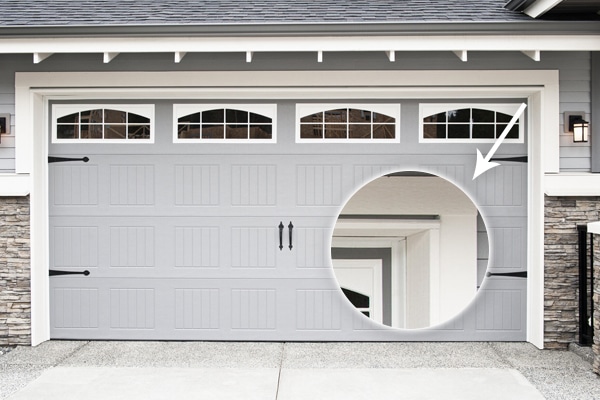
Your garage door frame does more than just hold things together. It supports the entire system and keeps everything aligned. When trim rots or the jamb warps, problems show up fast. I’ve worked on hundreds of these repairs across Green Bay. Most homeowners don’t notice issues until the whole system struggles. Let me walk you through what to look for and how to fix it right.
Signs Your Garage Door Frame Needs Repair
After 35 years in this business, I spot damage most people miss. Gaps around the door are the biggest giveaway. You might feel cold air sneaking in during Wisconsin winters. That’s usually warped or rotted wood around the door.
Water stains along the trim tell a story too. Moisture has been sitting there, slowly eating away at the material. I once helped a family in Ashwaubenon who ignored minor peeling paint. Six months later, their entire garage door frame needed replacing. The wood had turned soft and spongy underneath.
Listen for scraping sounds when the system operates. This often means the jamb has shifted. Your opener works harder, and parts wear out faster. Catching these signs early saves you money every time.
Understanding the Rough Opening and Door System
The rough opening is your starting point for any repair. It’s the actual hole in your wall before any finishing materials go up. Getting this measurement wrong throws everything off.
Your door system relies on precise dimensions. The rough opening should be about 3 inches wider and 1.5 inches taller than your actual unit. This gives room for the jamb and proper adjustments. I always tell customers to measure twice. Mistakes here cause alignment problems that follow you for years.
The exterior door situation matters too. Weather seals need solid contact points. Without them, energy bills climb and pests find their way inside.
The Role of Side Jambs and Head Jamb
Think of jambs as the backbone of your garage door frame. Side jambs run vertically on both edges. The head jamb sits across the top. Together, they create the finished opening.
Side jambs take the most abuse. They support the tracks and handle constant vibration. I check these first on every service call. Cracks or separation from the wall means trouble is coming.
The head jamb carries weight too. It needs to stay perfectly level. Even small sags affect how smoothly everything operates. A solid diagram helps homeowners visualize this before we start work.
DIY Garage Door Work vs. Hiring a Professional
I respect the DIY spirit. Some homeowners have the skills to handle basic trim replacement. If you’re comfortable with power tools and understand framing, you can tackle simple repairs.
Here’s what you should know before starting:
- Proper safety gear is non-negotiable
- You’ll need a helper for heavy lifting
- Permit requirements vary by municipality
- Spring tension is extremely dangerous
- Mistakes can void manufacturer warranties
However, anything involving the garage door frame structure itself gets complicated. The jamb connects to your wall framing. One wrong cut affects weatherproofing and security. Most customers who attempted DIY garage door framing called us to fix their work later.
For door frame repair beyond cosmetic trim, I recommend bringing in professionals. We complete most jobs in a single visit with parts already on our trucks.
How to Frame a Garage Door Opening Correctly
When you frame a garage door opening, precision matters more than speed. Start by confirming your rough opening dimensions match manufacturer specs. Every brand has slightly different requirements.
Install the head jamb first. Use a level and shim until it’s perfectly horizontal. Secure it with construction screws, not nails. Screws hold better against vibration over time.
Next, set your side jambs plumb. Work from top to bottom, checking alignment as you go. The garage door opening should form a perfect rectangle. Use a framing square at each corner.
Around the door, apply weatherstripping while materials are accessible. This step gets overlooked but makes a huge difference in Wisconsin’s climate.
Choosing the Right Lumber and Pressure Treated Materials
Material selection separates lasting repairs from temporary fixes. Standard pine works for interior applications. But anywhere moisture might reach needs pressure treated lumber.
I always use pressure treated material for the bottom sections of side jambs. Wisconsin snow and rain splash up constantly. Regular wood rots within a few seasons. Aluminum garage door frames are another option for durability.
For trim, consider composite materials. They resist moisture and insects better than natural wood. The upfront cost is higher, but you won’t replace them for decades. Quality lumber makes your install last.
Wisconsin Regulations for Door Frame Installation
Working in Green Bay means following state and local codes. These exist to keep your family safe and your property value protected.
- Wisconsin SPS 320-325 – Covers structural requirements for residential construction. Non-compliance can result in failed inspections.
- Green Bay Building Permits – Most framing work requires permits. Fines apply for unpermitted construction.
- Wisconsin Energy Code – Mandates proper insulation and sealing around openings. Violations increase heating costs significantly.
Always pull permits when required. Inspectors verify work meets safety standards. Skipping this step creates problems when selling your home later.
Trust Green Bay Garage Door Guards for Garage Door Frame Repairs
Your garage door frame protects everything behind it. Don’t let damaged trim or a failing jamb compromise your home’s security. Our Green Bay team brings real expertise to every repair.
We’ve served this community for years because we do things right. No unnecessary recommendations. No repeat visits for missed problems. Just honest work from neighbors you can trust.
Call Green Bay Garage Door Guards today. We’re available 24/7 because emergencies don’t wait. Let us restore your system to perfect working condition.
Q: How do I know if my garage door motor is dying?
A: Watch for warning signs like slow operation or intermittent failures. If your garage door motor struggles to lift the door or makes new grinding sounds, it’s wearing out. The frequent need to reset the system also indicates problems. Motors typically last 10-15 years with proper maintenance. When repairs become frequent, replacement usually makes more financial sense than continued fixes.
Q: Can I replace my garage door motor myself?
A: Technically, yes, but I recommend caution with this project. You need basic electrical knowledge and mechanical skills to do it safely. The motor itself isn’t too complicated to install with instructions. However, adjusting springs and calibrating safety features requires experence. One wrong move with springs can cause serious injury. Most homeowners find professional installation worth the added cost.
Q: Why does my garage door motor work sometimes but not others?
A: Intermittent operation usually points to electrical issues somewhere in the system. Loose wiring connections cause inconsistent power delivery to the motor. Temperature changes can also affect older units significantly. Check all wire connections at the motor and wall switch. Remote signal interference from nearby devices causes problems, too. If the basics check out fine, the circuit board might be failing inside.